Supported peer leadership
Peer tutors guide groups, while staff offer support, reflection and a dependable structure.
 GFP Culture Houses
Guided Functional Peer Support (GFP) brings people together around meaningful activities, shared interests and the knowledge we carry from lived experience.
GFP is a community-based model where people create and take part in groups shaped by their interests, strengths and hopes. The activity might be art, music, games, sport, digital skills—or something a group dreams up together.
Peer tutors help plan and guide activities. Staff support peer tutors and help make the setting safe and welcoming. Everyone can contribute, learn and belong.
The starting point is what people can do and want to explore—not a diagnosis or a deficit. The local community adapts the activity and environment to the people taking part.
GFP supports mental wellbeing through meaningful shared activity, relationships, belonging and agency. It draws on recovery principles such as hope, self-direction, strengths and the possibility of a meaningful life.
GFP turns peer support into something people can do together in everyday life.
Peer tutors guide groups, while staff offer support, reflection and a dependable structure.
People meet through activities that matter to them and make room for curiosity, practice and shared achievement.
People learn with and from one another. Experience becomes a resource for connection, not a reason to stand apart.
Shared activity creates room for connection, contribution and discovery.
Explore sound, rhythm and songs as a group, with space for different ways to take part.
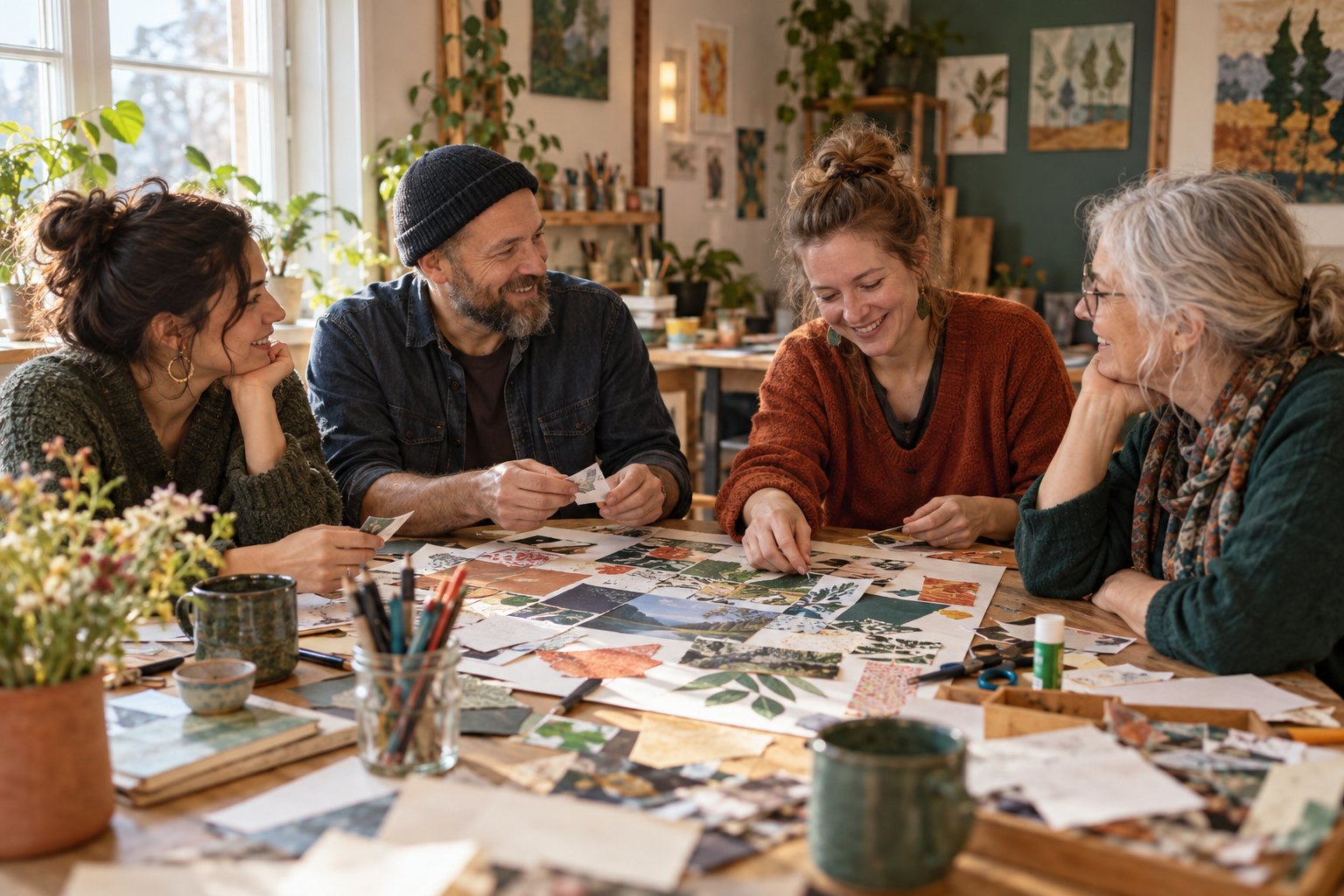
Try visual art, crafts or other creative practices and learn from one another.
Walking football, sport and other movement can build confidence and connection together.
“Don’t adapt people to the environment. Adapt the environment to people.”
Kukunori, a Finnish association, coordinates GFP-culture house activity globally and supports exchange between local communities.
There is no single activity that defines a GFP Culture House. The shared thread is a welcoming place where people can bring what they know, try something new and shape the community together.
Make room for what people can do.REMESOS (2025–2028), funded by the EU4Health programme, brings together 12 partners from 9 countries. Alongside work on measuring population mental health, the project is adapting and implementing GFP in Greece, Slovakia, Portugal and Bosnia and Herzegovina. The work is ongoing.
In 2024, the European Commission’s Best Practice Portal selected the Guided Functional Peer Support entry as a mental-health best practice.
Historical Finnish GFP results from Innokylä, alongside 2025 participant feedback and activity results.
Innokylä’s historical GFP outcome descriptions report 28–62% moving towards work or study, or a positive exit after the first year.
In the 2025 walking football player survey, respondents reported stronger physical and mental wellbeing. 92% reported stronger community, 83% stronger personal resources, 90% meaningful activity and 75% new meaningful relationships.
In the 2023 player survey for people taking part in the sport, 93% said walking football had increased their wellbeing. 84% said it strengthened their personal resources; 91% felt their physical fitness had improved; 92% said it strengthened community; 76% gained meaningful relationships; and 95% felt part of the group.
In 2025, Roso Games supported 13 young people in moving into study, work or supported employment. Its online community brings young people together through games, creative workshops and peer-led activity. Feedback highlighted learning, practical activity and meeting new people.
In 2025, women took part in 139 group sessions (738 attendances). Participants described stronger community and participation, everyday resources and future-oriented skills.
Sources: Innokylä, GFP outcomes · Kukunori, walking football surveys (2023 and 2025) · Kukunori Annual Report 2025, pp. 18–19 and 26–31.
The GFP Culturehouses Global platform connects member organisations. Explore training videos and webinars, meet GFP Culture Houses in other countries, and exchange practical ideas about what works in local communities.
Pokka is Kukunori’s wellbeing evaluation platform, available to GFP community members. Ready-made, partly customisable questionnaires help organisations gather feedback on participation, wellbeing and development needs.
Clear results help teams see what works, follow change over time and use that knowledge to improve their activities. Shared survey templates save time and make evaluation part of everyday work.
From participant feedback to learning and better everyday decisions.
Kukunori is a Finnish development organisation working to improve quality of life for people in vulnerable situations. It develops and shares practical ways to strengthen wellbeing, participation and human connection. Recovery-oriented thinking is part of this work: it makes room for hope, agency, meaningful activity and each person’s own direction.
Kukunori brings people and communities together to learn, shape solutions and strengthen mental wellbeing. These examples show how the approach takes different forms in everyday life.
Kukunori’s international network is taking shape through local partnerships.
Ideas, evidence and news from the GFP community.
In 2024, the European Commission’s Best Practice Portal listed Guided Functional Peer Support (GFP), a community-based approach to mental wellbeing developed in Finland and coordinated by Kukunori.
The Commission’s record describes a strengths-oriented approach built around peer support, shared skills and creative communities. The portal helps make practices visible and supports exchange and transfer across Europe. Practice owners may present their work to Member State representatives who could be interested in using it. A listing can open doors to learning and partnership; it does not guarantee funding, adoption or better outcomes by itself.
GFP starts from a simple idea: mental wellbeing is supported not only in services, but also in the relationships and activities of everyday community life. Therapy and professional services remain essential for many people. Community-based action can complement them by making room for shared interests, contribution, belonging and agency between appointments and beyond formal services. It offers another way to participate—not a replacement for care.
That is why civil society matters. Associations, local groups and people with lived experience can create welcoming places where people make music, art, play, move, learn and shape activities together. In GFP, peer tutors guide activities with professional support. Local partners adapt the model to their community rather than simply copying a fixed programme.
International partnerships help this work travel thoughtfully. Kukunori was selected in 2024 for Next in Mind, a Nordic accelerator supporting youth mental wellbeing innovations. Ashoka’s network has supported Kukunori’s global work, including collaboration in Kenya with Making More Health and local organisations. REMESOS is now adapting and implementing GFP in four European countries. Each step depends on local partners and learning together.

Markus Raivio
Executive Director of Kukunori
I’m Markus Raivio. In Finland, GFP Culture House activity has grown to 25 GFP culture houses. The approach is also being used and adapted with communities in Wales and Kenya. What matters to me is that people can meet through something meaningful, discover what they bring, and shape the activity together.
In Finland, GFP-based activity has been carried out in different settings, including prisons, with older adults, in walking football groups and teams, with people with intellectual disabilities, and with people across neurotypes.
Peer support takes many forms. GFP adds a shared activity as the meeting point: people can make art, play, learn or do something together without needing to talk about personal difficulties. The focus is on strengths, interests and contribution—not on requiring disclosure.
Clubhouses are known for a work-ordered day in which members and staff work side by side to run the community. GFP centres culture, art and other meaningful group activities, often guided by members for one another. In Finland, some clubhouses have brought culture-house activities into their own community life. The approaches can complement one another.
Visitors and peer tutors do not pay to participate, and taking part is always voluntary. Staff, venue and activity costs are often covered by project funding; funding arrangements are made locally.
It can be, but it does not have to be. A GFP Culture House is first and foremost a place where group activities happen and are planned together. It may be a youth centre, museum, library, art gallery, park or another shared setting. Often it is a physical space where people meet.
Yes. GFP activity can also happen entirely online. ROSO Games is one example of a GFP-based creative group project run online.
A typical set-up can involve around 150 emerging adults aged 18–35, with about 20 trained as functional peer tutors and a staff team of two or three. A planning and group activity space of roughly 100 m² often serves as the main hub. Culture House activity is commonly hosted by a social and health organisation, a school or another low-threshold community venue that already has facilities, staff and space. Local arrangements vary. The programme commonly runs about 20 activity-based groups each week on different themes, guided by trained functional peer tutors. Tutor training is often organised once or twice a year and lasts about six weeks.
If your organisation is exploring a peer-led, community-based approach, tell us about your people, local context and what you hope to build. We can discuss whether GFP could fit and what a thoughtful first step might look like.
Interested in bringing GFP to your organisation or joining the international community? Find out how to connect.